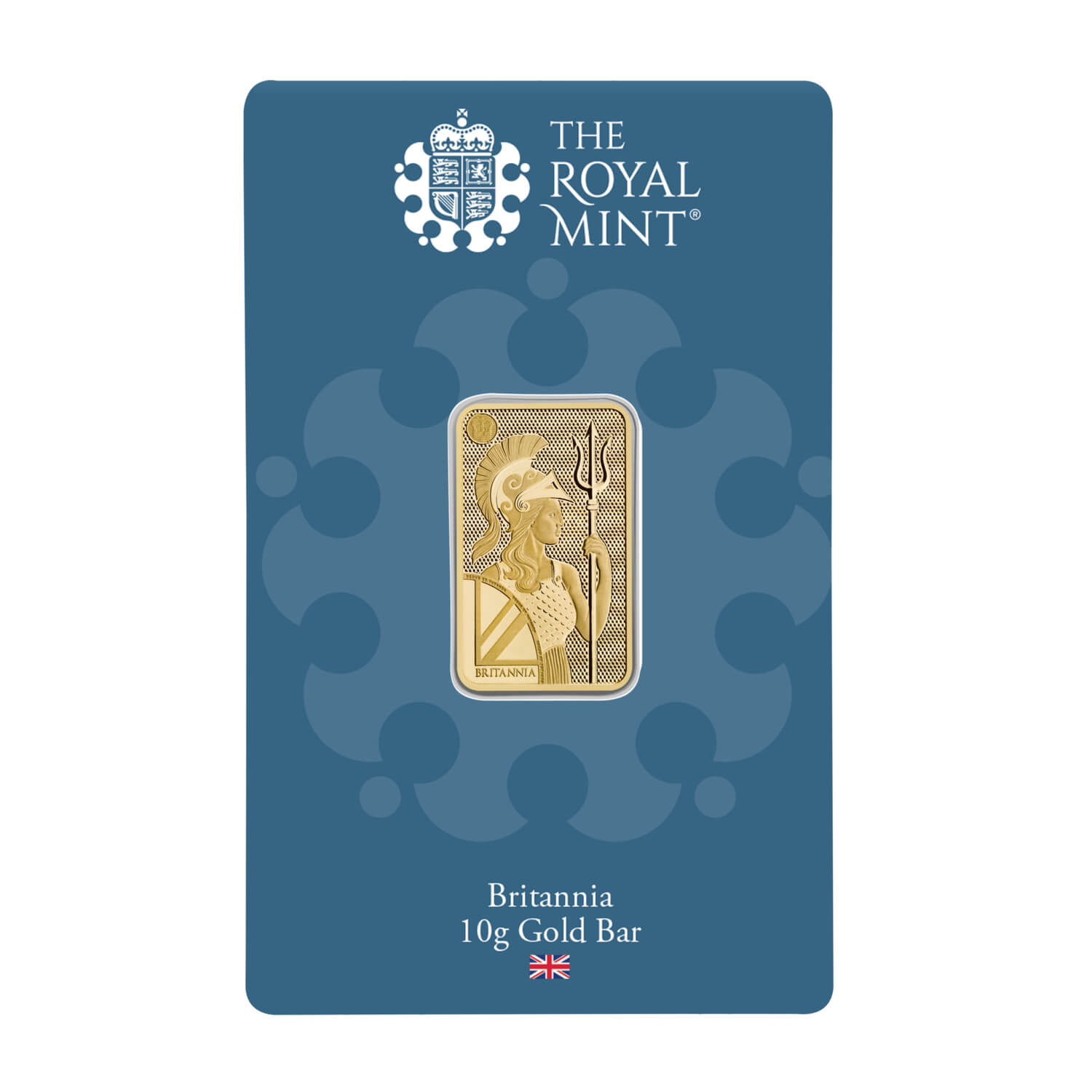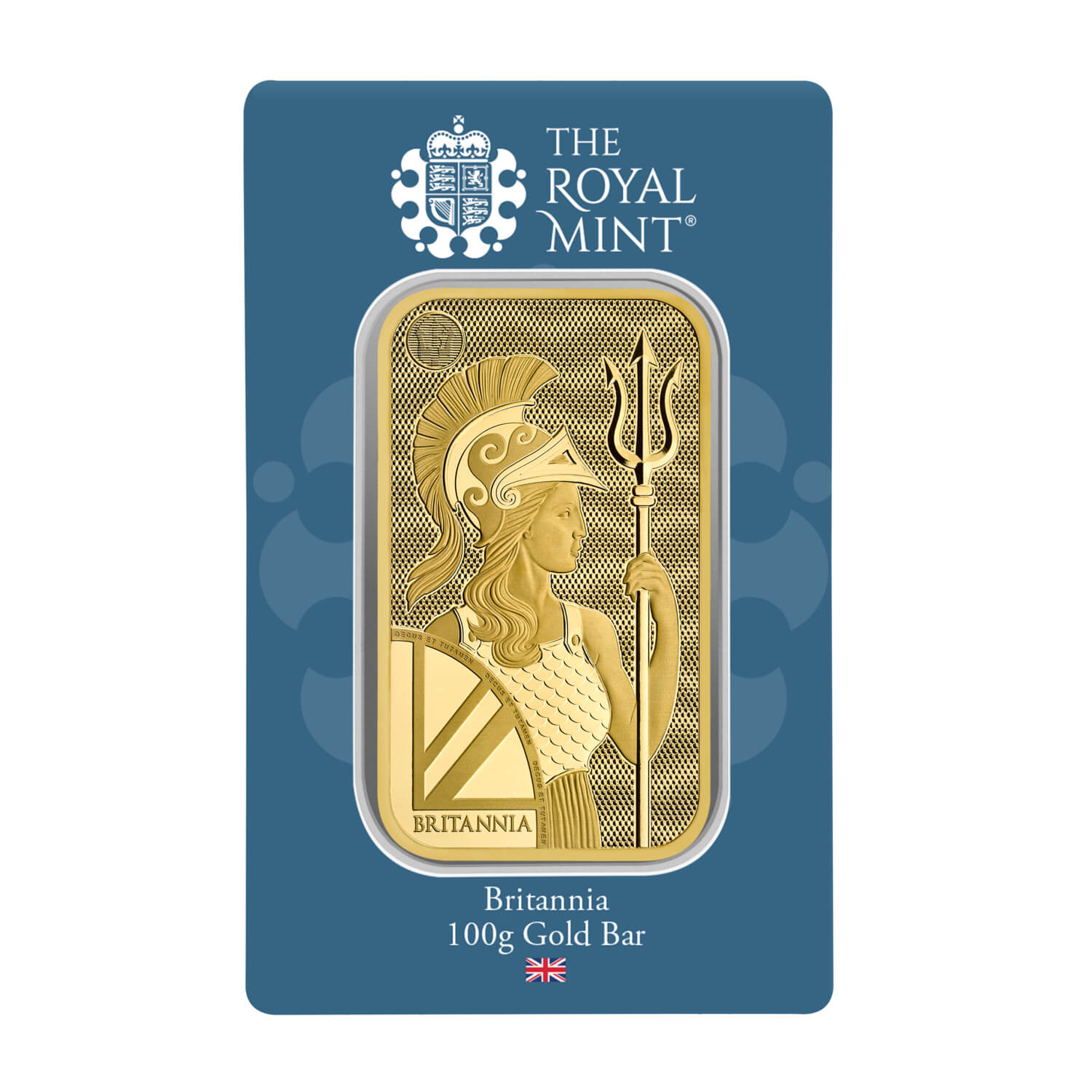
Britannia 100g Gold Bullion Minted Bar
£31,576.52
In Stock


Please note: Images are for illustration purposes only. Actual product may vary slightly.
Price unavailable
George III gold Quarter-Guinea, 1762 Obverse - Long haired laureate head right, Latin legend and toothed border surrounding, GEORGIVS. III. DEI. GRATIA. Reverse - Crowned quartered shield of arms, date either side of top crown, M.B.F. ET. H. REX. F.D. B. ET. L. DVX S.R.I.A.T. ET. E. edge diagonally grained, weight 2.11g Has been slabbed and graded by NGC as MS63. The abbreviated Latin legends translate as on the obverse "George the Third by the Grace of God," and on the reverse as "King of Great Britain, France and Ireland, Defender of the Faith, Duke of Brunswick and Luneberg, High Treasurer and Elector of the Holy Roman Empire." The price of silver had risen globally to such an extent that the intrinsic value of silver in British silver coins was actually worth more than its face value, resulting in the lower denominations being melted down, creating a shortage of silver coins in circulation. With these lower denomination silver coins becoming scarce, there needed to be a replacement to avoid an economic catastrophe The Quarter Guinea was the brainchild of the great Sir Isaac Newton. In 1699 the post of Master of the Royal Mint fell vacant by the death of Thomas Neale. Though technically less senior than that of Warden, it was a more lucrative post because the Master acted as a contractor to the Crown and profited from the rates at which he put the work out to sub-contractors. The Mastership was offered to Newton and he took up its duties with effect from Christmas Day 1699. Surviving the political upheavals of those troubled times, he remained as Master until his death in March 1727. The abbreviated Latin legends translate as on the obverse "George the Third by the Grace of God," and on the reverse as "King of Great Britain, France and Ireland, Defender of the Faith, Duke of Brunswick and Luneberg, High Treasurer and Elector of the Holy Roman Empire." The calendar year output of gold in the year 1762 totalled £532,665, mostly boosted by the capture of gold and silver bullion from the Spanish treasure ship The Hermione.
Explore and compare available golds from different manufacturers by weight, price, and cost per gram. Review the options side by side to find the product that best suits your budget and investment goals.
| Product / manufacturer | Weight | Price | Price per gram | Premium over spot | Value |
|---|---|---|---|---|---|
| 1762 George I Gold Quarter Guinea The Royal Mint | 2.09 g | £200.96 | £104.89 /g | -0.00% |  Best value Best value |
| 1762 George I Gold Quarter Guinea The Royal Mint | 2.09 g | £200.96 | £104.89 /g | -0.00% | Best value |
| 1718 George I Gold Quarter Guinea The Royal Mint | 2.1 g | £201.92 | £104.89 /g | -0.00% | Best value |
| 1644-45 Charles I Gold Crown, Tower Mint under Parliament The Royal Mint | 2.16 g | £207.69 | £104.89 /g | -0.00% | Best value |
| 1652 Commonwealth Gold Crown The Royal Mint | 2.25 g | £216.34 | £104.89 /g | -0.00% | Best value |
| 1644-45 Charles I Gold Crown, Tower Mint under Parliament The Royal Mint | 2.31 g | £222.11 | £104.89 /g | -0.00% | Best value |
| 1533-42 Henry VIII Gold Crown of the Double Rose (Mule) The Royal Mint | 3.69 g | £354.81 | £104.89 /g | 0.00% | Best value |
| 1794 George III Gold 'Spade' Guinea The Royal Mint | 8.37 g | £804.80 | £104.89 /g | -0.00% | Best value |
George III gold Quarter-Guinea, 1762 Obverse - Long haired laureate head right, Latin legend and toothed border surrounding, GEORGIVS. III. DEI. GRATIA. Reverse - Crowned quartered shield of arms, date either side of top crown, M.B.F. ET. H. REX. F.D. B. ET. L. DVX S.R.I.A.T. ET. E. edge diagonally grained, weight 2.11g Has been slabbed and graded by NGC as MS63. The abbreviated Latin legends translate as on the obverse "George the Third by the Grace of God," and on the reverse as "King of Great Britain, France and Ireland, Defender of the Faith, Duke of Brunswick and Luneberg, High Treasurer and Elector of the Holy Roman Empire." The price of silver had risen globally to such an extent that the intrinsic value of silver in British silver coins was actually worth more than its face value, resulting in the lower denominations being melted down, creating a shortage of silver coins in circulation. With these lower denomination silver coins becoming scarce, there needed to be a replacement to avoid an economic catastrophe The Quarter Guinea was the brainchild of the great Sir Isaac Newton. In 1699 the post of Master of the Royal Mint fell vacant by the death of Thomas Neale. Though technically less senior than that of Warden, it was a more lucrative post because the Master acted as a contractor to the Crown and profited from the rates at which he put the work out to sub-contractors. The Mastership was offered to Newton and he took up its duties with effect from Christmas Day 1699. Surviving the political upheavals of those troubled times, he remained as Master until his death in March 1727. The abbreviated Latin legends translate as on the obverse "George the Third by the Grace of God," and on the reverse as "King of Great Britain, France and Ireland, Defender of the Faith, Duke of Brunswick and Luneberg, High Treasurer and Elector of the Holy Roman Empire." The calendar year output of gold in the year 1762 totalled £532,665, mostly boosted by the capture of gold and silver bullion from the Spanish treasure ship The Hermione.
 Produced by The Royal Mint, a recognised precious metals manufacturer.Struck in 999.9 fine gold where specified by the source catalog.
More The Royal Mint products selected from the same manufacturer.
Comparable gold options by metal, type, and investment use.
Get your free, no-obligation quote today and discover the true value of your gold.